Why Does the Difference Matter?
There are a seemingly infinite number of toys on the market. It can feel overwhelming when trying to choose the ‘best’ toys for your child. One key difference I recommend paying attention to when choosing toys is the difference between active and passive toys.
What is an active toy? An active toy is a toy that does all the work for your child or is entertaining without requiring much activation. It results in your child having a passive play experience.
Examples of toys that are active:
- Fisher-Price Laugh & Learn Smart Stages Puppy
- vTech Busy Learners Activity Cube
- Fisher-Price Laugh & Learn Game & Learn Controller
- Any toy ‘cell phone’ or toy ‘laptop’
- Baby Einstein Take Along Tunes
- vTech Touch and Learn Activity Desk
- Infantino Spin & Slide DJ Panda
- iPads and other types of electronic tablets
- Animatronic toys
What is a passive toy? A passive toy is a toy that needs to be activated/used by your child to produce an outcome. It results in your child having an active play experience.
Examples of toys that are passive:
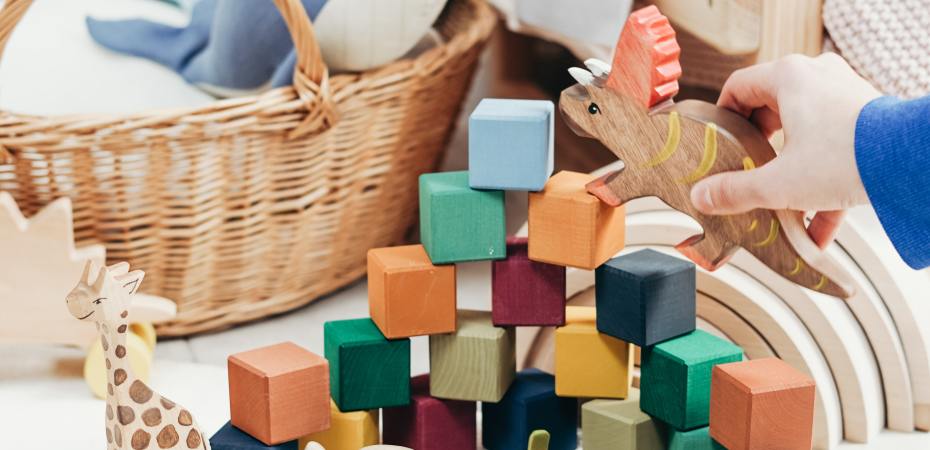
- Blocks
- Ring stacker
- Shape sorter
- Rattles and musical instruments
- Push and pull toys
- Learning Resources Spike the Fine Motor Hedgehog
- Balls
- Melissa & Doug Deluxe Pounding Bench
- Magnetic fishing game
Remember
Active toy = Passive child
Passive toy = Active child
*The more a toy does, the less your child has to do AND the less a toy does, the more your child has to do. Children learn through active participation.
Some questions you may have…
Is there a time and place for both active and passive toys?
Of course! I have found passive toys to be helpful for children who are easily frustrated or prefer visual/auditory stimulation for calming. It can provide a break from working with passive toys. I personally like to use something that plays music when my daughter needs a break, has become frustrated, or I need to run to the bathroom.
Should I throw out all the active toys that I have for my child?
Of course not! Make sure you are providing ample opportunity for play with passive toys but there is always a place for some playtime with active toys, for example, when you need to keep your child engaged while you attend to something else. You can also take the batteries out of some of the active toys to promote more active play.
What if family members gift active toys?
Once someone has given you a gift, the good deed is done. You can do what you would like with the gift itself. Whether that’s keep it and monitor your child’s use of it or donate/return it, that’s up to you! It also may be helpful to give toy suggestions ahead of birthdays and holidays if this is something that works within your family dynamics. It works for us with some family members and not for others so I usually donate or give away duplicates, overstimulating toys, etc. (try a local Buy Nothing Group on Facebook or you can even resell items if you didn’t receive a gift receipt).
 My Nurtured Child