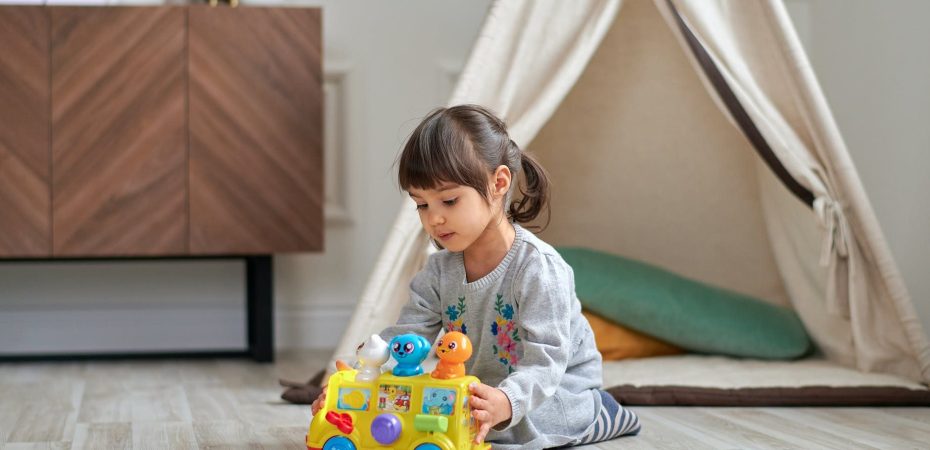
Have you ever walked into a grocery store to buy a jar of peanut butter and been overwhelmed by the sheer number of choices? Do you want crunchy or creamy? What size container do you want? Should you get JIF, Skippy, or the store brand? Children experience the same overwhelming feeling when they have too many toys. You might notice your child throwing toys, dumping toys, or moving from one toy to another quickly. How can you help your child engage and focus? By limiting the number of toys available!
The benefits of limiting toys
- Creative play. Children have more opportunity to problem solve and use toys in new and different ways if they can’t just toss aside a toy and choose from a whole bunch of other toys.
- Increased attention span. Similar to above, fewer distractions and no overwhelming urge to move onto the next toy.
- Excitement. Old toys become new (and exciting!) again when you rotate toys. Every few weeks, tuck away a few toys in a closet or high on a shelf and put out a few that have been in hiding.
- Improved focus. When there are fewer options, children are not distracted and can focus on one toy at a time.
- Cooperation. If you have more than one child, fewer toys can mean more cooperation. They will have to learn to play and work together to use what toys are available and to creatively think of play ideas with other household objects (blankets, empty paper towel rolls, etc.).
- Working through frustration. How easy is it to toss aside a toy that causes frustration when there is a room full of more toys to use instead? With fewer options, children will learn to work through the frustration of not being able to figure out a toy on the first try. This helps with skills such as self-regulation, perseverance, or asking for help.
So, now you’re thinking, ‘How can my child learn and develop without toys?’ or ‘Should I just dump all their toys in the garbage bin right now?’ Before you do that, check out the practical suggestions below that can put you and your child well on your way to engaged, creative, and exciting play.
How to limit toys & expand play
- Take inventory. Pay attention to what toys your child actually uses and enjoys. Donate or pass on the rest!
- Rotate toys. It could be every two weeks, or every two months! Don’t stress about using an exact timeframe (remember: happy parent, happy child). Pay attention to when your child seems bored or take some new ones out the next time you’re cleaning out the closet.
- Display and contain toys. Make sure the toys you do offer have a place (easier clean-up) but are also readily visible and available to your child. Shelves, small bins, and baskets work great for this.
- Outdoor play. Spend more time at playgrounds, parks, creeks, swimming pools. Playing in and observing nature is so important for kids as they grow and develop. It presents endless opportunities for sensory play, gross motor skill development, self-regulation, and creativity.
- Try ‘toy-free’ activities. Bake cookies, read a book, be on the lookout for free children’s activities in your neighborhood (music class, book reading, etc.), make homemade ice cream, sing and dance in the living room.
- Give experiences. Give the gift of an experience rather than a new toy at birthdays and holidays! Try a magazine subscription (check out babybug for younger children, or Highlights for older children), a museum membership, or music lessons.
- Prepare suggestions. Have a list of suggestions ready for when grandparents, friends, etc. want to give your child a toy for birthdays or holidays. The list can have both toys and experiences!

